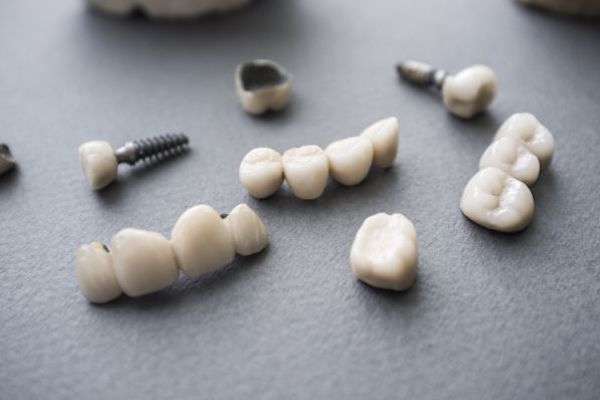
 A patient may invest in dental implants for a variety of different reasons, many of which focus on positively changing personal image and improving overall oral health. Implants are often applied when patients are missing one or more teeth and are not interested (or have had no success with) dentures or dental bridges. To understand if this type of dental work is the right course of action, a patient must first know about the types of implants and the issues they address.
Implant options
On a basic level, a dental implant is a metal post that is screwed into the patient’s jawbone. Once secured, an artificial tooth, or crown, that matches the patient’s natural tooth color is attached to the post. The end result is a full smile and healthy, sturdy bite.
Dental implants can be broken into several categories, and a dentist may suggest one over the others because of specific patient needs. First, a dentist must determine if the patient has a strong enough jawbone for an implant. After that is decided, a patient may receive one of three different types of implants.
Endosteal versus subperiosteal
All implants can be divided into two major types: endosteal and subperiosteal. Endosteal implants are placed directly in the jawbone. These are often used with patients who have strong, healthy jawbones that are not at risk of breaking during the procedure or after the implants are placed. Endosteal placements are more common than subperiosteal.
Subperiosteal implants do not go into the jawbone but rest above it within the gums. Patients who do not have robust jawbones may undergo bone restoration techniques to regrow and fortify the bone to make it a candidate for endosteal implants. However, patients who do not wish to receive this treatment can opt for subperiosteal implants.
Single implants
Single dental implants are used if a patient is missing just one tooth. One post can be set into the jawbone where the tooth is missing, essentially replacing the lost root. The jawbone must then be given ample time to heal around the post, a period that can last several months. After it is fully healed, the crown is secured to the post via a third piece called an abutment.
Implant-supported bridges
Some patients are missing consecutive teeth in a row. In this case, dental implants can be placed in the location of the roots of the two teeth on each end of the row. The crowns attached to these implants support the crowns in between, creating an effective “bridge.” This removes the need for an implant under each artificial tooth.
Implant-retained dentures
The third option is for patients missing most teeth. Several implants are secured in the jawbone and attached to an entire denture that sits on top of the gums. Instead of having dentures that must regularly be removed, these dentures are permanently fixed in place.
Conclusion
Some dental implants work better for certain patients than others. See a dentist to get an assessment of your teeth and to discover what implant may work well for you.
Request an appointment or call Dental Excellence of Greenhaven at 916-293-0504 for an appointment in our Sacramento office.
Recent Posts
A dental implant is widely considered the tooth replacement solution that most closely resembles a natural tooth in durability, functionality, and appearance. However, like natural teeth, dental implants require diligent and consistent care to ensure longevity. Incorporating proper dental implant care into your oral hygiene routine can prevent complications and keep your smile healthy for…
Dental implants are a permanent, functional solution for patients with tooth loss in one or both dental arches. Both partial and full arch dental implants have become more accessible, customizable, and successful for a wide range of patients. However, they have different uses and candidacy requirements. Understanding the differences between these options helps clarify which…
A dental implant is the gold standard of dental restorations. It provides stability and natural-looking results. Understanding the benefits of implants can motivate you to see your general dentist about it. Here are the different oral health advantages of a dental implant.The titanium rod acts as the dental root. It merges with the jawbone and…